What Is an Actuator in HVAC? Types, Uses & Buying Guide for UAE Contractors
An actuator is a small but essential component in modern HVAC systems. It controls the movement of air dampers, control valves, louvres, and other mechanical components in response to signals from a thermostat, controller, or Building Management System (BMS).
For HVAC contractors, MEP companies, facility managers, and technicians in Dubai and across the UAE, selecting the right actuator is crucial for maintaining accurate temperature control, effective airflow management, energy efficiency, and reliable HVAC operation.
If you are looking for an HVAC actuator supplier in Dubai or the UAE, understanding the different actuator types, applications, control signals, voltage requirements, and torque specifications can help you select the right product for your project.
What Is an HVAC Actuator?
An HVAC actuator is a mechanical device that converts an electrical or pneumatic control signal into physical movement. This movement allows an HVAC system to automatically open, close, or adjust a valve or damper.
For example, a temperature controller may detect that a room needs more cooling. It sends a signal to the actuator, which then adjusts the chilled water valve or air damper to regulate the cooling output.
In simple terms, the HVAC controller provides the instruction, while the actuator performs the movement.
Actuators are commonly installed in air-handling units (AHUs), fan-coil units (FCUs), VAV systems, chilled-water systems, ventilation systems, package units, and building automation systems.
Why Are Actuators Important in HVAC Systems?
Modern commercial buildings depend heavily on automated HVAC control. Actuators allow valves and dampers to respond automatically instead of requiring manual adjustment.
A properly selected HVAC actuator can help provide accurate airflow and temperature control while supporting efficient operation of connected equipment.
In the UAE, where air conditioning systems operate for long periods because of the hot climate, reliable control components are particularly important for commercial buildings, offices, hotels, hospitals, retail spaces, warehouses, and industrial facilities.
A faulty actuator can result in problems such as incorrect airflow, poor temperature control, stuck dampers, improper chilled water flow, and inefficient HVAC operation.
Types of HVAC Actuators
There are several types of actuators used in HVAC applications. The right choice depends on whether the actuator is controlling a damper or valve, the required movement, control signal, torque, voltage, and fail-safe requirements.
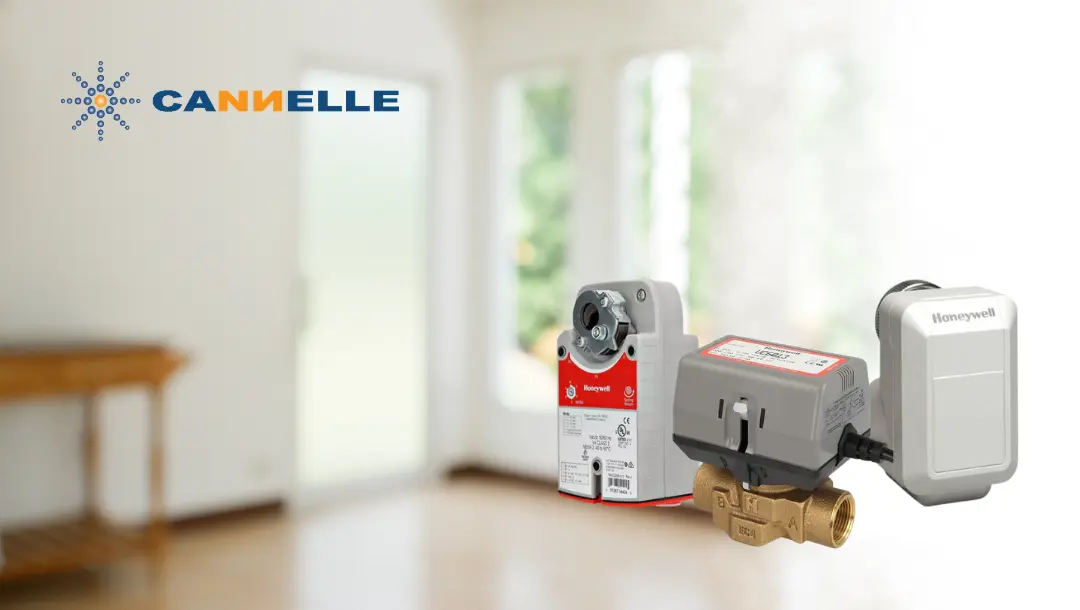
Damper Actuators
A damper actuator controls the position of an air damper within an HVAC duct or ventilation system. It can open, close, or modulate the damper to regulate airflow.
Damper actuators are widely used in AHUs, VAV boxes, fresh air systems, exhaust systems, ventilation systems, and HVAC ductwork.
Depending on the application, a damper actuator may be either spring return or non-spring return.
Spring-return models automatically move to a predetermined position when power is lost, making them suitable for applications where a defined fail-safe position is required.
Valve Actuators
A valve actuator controls HVAC valves used to regulate the flow of chilled water, hot water, or other fluids.
They are commonly installed in chilled water systems, AHUs, FCUs, heat exchangers, chiller plants, and hydronic HVAC systems.
Valve actuators can operate two-way or three-way control valves depending on the system design. They are essential for maintaining accurate water flow and temperature control.
If you are sourcing an HVAC valve actuator in Dubai, it is important to match the actuator with the valve size, valve type, control signal, and required torque.
Electric Actuators
Electric actuators use electrical power to produce mechanical movement and are widely used in modern HVAC automation systems.
Common applications include damper control, HVAC valve control, AHU automation, BMS systems, and building climate control.
Electric actuators are available with different operating voltages and control signals, so the specifications must be checked carefully before purchasing.
Pneumatic Actuators
Pneumatic actuators use compressed air to create movement. They are more commonly associated with older HVAC control systems and certain industrial applications.
They can be useful where a pneumatic control infrastructure is already available or where the application requires pneumatic operation.
Spring Return and Non-Spring Return Actuators
Spring-return actuators contain a spring mechanism that returns the actuator to a predefined position when electrical power is removed.
Non-spring-return actuators do not automatically return to a set position after power loss.
The correct configuration depends on the HVAC application and the required safety or operating position.
On/Off and Modulating Actuators
An on/off actuator generally moves between two positions, such as fully open and fully closed.
A modulating actuator, on the other hand, can position the valve or damper at different points between open and closed. This allows more precise control of airflow or water flow.
Modulating actuators are commonly used where accurate HVAC temperature and flow control is required.
Where Are HVAC Actuators Used?
HVAC actuators are used across residential, commercial, industrial, and institutional HVAC installations.
Typical applications include:
- Air Handling Units (AHUs)
- Fan Coil Units (FCUs)
- Variable Air Volume (VAV) systems
- Chilled water systems
- HVAC control valves
- Fresh air dampers
- Exhaust air systems
- Ventilation systems
- Building Management Systems (BMS)
- Commercial air conditioning systems
- Chiller plants
- Heating and cooling coils
- Smoke and fire damper applications
For large HVAC projects in Dubai and the UAE, actuators are often integrated with BMS controls to provide centralised monitoring and automatic operation.
How Does an HVAC Actuator Work?
The operating principle is relatively simple.
A thermostat, sensor, controller, or BMS sends a control signal according to the required temperature, airflow, pressure, or system condition.
The actuator receives this signal and converts it into mechanical movement. Depending on its application, the actuator then rotates a damper shaft or moves a valve to the required position.
For example, in an AHU chilled water system, when the cooling requirement increases, the controller can signal the valve actuator to open the chilled water valve further. This increases water flow through the cooling coil and helps provide the required cooling capacity.
HVAC Actuator Buying Guide for UAE Contractors
Choosing an actuator based only on brand or physical size can result in compatibility problems. Before ordering an actuator, contractors and HVAC technicians should check the complete system requirements.
1. Check the Application
First, determine whether you need a damper actuator or valve actuator.
The actuator must be suitable for the specific component it will operate. A damper actuator is not automatically suitable for a control valve, and vice versa.
2. Check Voltage Requirements
Check the operating voltage specified by the HVAC control system.
Depending on the model and application, actuators can be designed for different power supplies. Using an actuator with an incompatible voltage can cause incorrect operation or equipment damage.
3. Check the Control Signal
Control signals are another important consideration.
HVAC actuators may use on/off, floating point, or modulating signals such as 0–10V. The actuator must be compatible with the controller or BMS system.
Before purchasing, compare the actuator’s control signal with the existing HVAC control panel or BMS specification.
4. Check Torque Requirements
Torque is particularly important when selecting a damper actuator.
The actuator must generate enough torque to move the damper reliably throughout its operating range. A unit with insufficient torque may struggle to operate the damper and can experience premature failure.
For valve applications, the required actuator force or torque must also be compatible with the valve manufacturer’s specifications.
5. Check Spring Return Requirements
Determine whether the application requires a spring return actuator.
This is particularly important for certain damper applications where the damper must return to a specific position when electrical power is interrupted.
6. Confirm Compatibility With the BMS
If the actuator will be connected to a Building Management System, check that its control method and communication requirements are compatible with the existing system.
For replacement projects, it is useful to compare the existing actuator’s model number, voltage, control signal, torque, rotation angle, and mounting arrangement.
7. Consider the Operating Environment
UAE HVAC equipment can operate in demanding environmental conditions. For outdoor or plant-room applications, contractors should consider the actuator’s operating temperature range, enclosure protection, humidity resistance, and installation environment.
This is particularly important for HVAC equipment installed in exposed locations or areas with high temperatures and dust.
Common HVAC Actuator Problems
Like other HVAC control components, actuators can eventually develop faults because of age, mechanical resistance, electrical issues, incorrect installation, or continuous operation.
Common symptoms include a damper that does not move, a valve that remains partially open, unusual actuator noise, slow movement, incorrect positioning, or an HVAC zone that does not maintain the expected temperature.
A technician should check the actuator together with the controller, wiring, valve or damper, and control signal rather than replacing the actuator without diagnosing the complete system.
Why Buy HVAC Actuators From a UAE HVAC Supplier?
For contractors working on active projects, product compatibility and availability can be just as important as the product itself.
Buying from an established HVAC supplier in Dubai can make it easier to confirm specifications, check product availability, and source related HVAC components for the same project.
Cannelle Store supplies a range of HVAC products and building materials for contractors, technicians, MEP companies, facility management teams, and businesses across the UAE.
Whether you need an actuator for an AHU, VAV system, chilled water valve, ventilation damper, or BMS application, always confirm the technical specifications before placing an order.
Final Thoughts
An actuator may be a relatively small HVAC component, but it plays an important role in automated air conditioning and building control systems. From damper actuators and valve actuators to modulating and spring-return models, each type is designed for a specific application.
For UAE contractors, the best actuator is not simply the one with the right brand or size. It must match the application, voltage, control signal, torque, mounting arrangement, fail-safe requirement, and BMS configuration.
If you are looking for an HVAC actuator supplier in Dubai or the UAE, Cannelle Store offers HVAC control products including Honeywell actuators, valves, and thermostats, along with a wide range of HVAC and building material products for commercial and industrial applications.